


Common property lighting is one of the most frequently reported maintenance issues in strata buildings. Replacing a failed fitting or fixing a faulty light can look like a straightforward way to keep costs down. In many cases, it has the opposite effect.
- Small electrical faults can develop into larger and more expensive problems over time.
- Repeated call-outs add up faster than a planned repair would have cost.
- Inconsistent lighting creates safety concerns in corridors, stairwells, and car parks.
- Temporary fixes rarely reach the underlying electrical cause.
With more than 10 years of industry experience, Enelex Electrical Services works as a trusted strata electrician in Melbourne, helping owners corporations and property managers maintain safe, reliable common property lighting. This guide explains why cheap repairs frequently lead to higher long-term costs and what strata managers should consider before approving the next maintenance request.
Cheap common property lighting repairs commonly cost strata properties more because they treat the visible fault rather than the electrical cause behind it. An experienced strata electrician such as Enelex Electrical Services understands that planned repairs and scheduled electrical maintenance reduce repeat call-outs, improve safety, and extend the working life of shared electrical assets.
Why Do Cheap Common Property Lighting Repairs Usually Cost More?
Cheap repairs fix the symptom. The cause stays in place. Replacing a globe or reconnecting a loose cable brings the light back on, but the original fault typically remains. Lighting failures can result from ageing wiring, moisture entering fittings, overloaded circuits, deteriorated terminals, or equipment that has reached the end of its service life. When that happens, the same fault develops again weeks or months later.
One factor frequently overlooked is that every return visit involves more than labour. Property managers spend additional time arranging access, communicating with residents, processing invoices, and managing the disruption that comes with unplanned maintenance. Those operational costs rarely appear on the invoice but they continue to increase. In many cases, they exceed whatever was saved by choosing the lowest quote in the first place.
Planned multi-unit electrical maintenance identifies recurring faults before they become a pattern of ongoing expense rather than a problem that is addressed effectively.
Stop Paying For The Same Lighting Problem Again
How Do Patch Repairs Affect Safety and Compliance?
Temporary repairs leave electrical hazards in place. This is particularly important in common property areas because the consequences affect every resident, unlike in a private dwelling.
Stairwells, corridors, car parks, and external pathways all depend on reliable lighting for safe movement. When faults underneath a surface repair go unresolved, potential risks include:
- Flickering or unreliable lighting in high-traffic areas.
- Water-damaged fittings that continue to deteriorate.
- Overheated electrical connections that develop over time.
- Increased likelihood of electrical failure at the worst possible moment.
One thing experienced electricians check that generic maintenance guidance misses is what a failed fitting is indicating. A single faulty light is usually an isolated problem. A pattern of faulty lights across common areas can indicate a broader issue in the building's electrical infrastructure. Inspecting nearby circuits as part of the same visit costs very little extra and can detect distribution faults before they escalate.
Scheduled electrical maintenance also creates the opportunity to assess whether safety switch installation upgrades or other protective measures would improve both occupant safety and overall system reliability across the building.

When Does a Permanent Repair Become a Better Investment?
Almost always, across the life of the asset. A permanent repair removes the root cause. A patch repair treats the symptom and leaves the root cause to produce the next fault. That cycle costs more in total even when each individual repair invoice looks smaller.
| Patch Repair | Permanent Repair | |
|---|---|---|
| Initial cost | Lower | Higher upfront investment |
| Future call-outs | Frequent | Fewer |
| Asset lifespan | Shorter | Extended |
| Long-term maintenance cost | Higher | Lower |
| Resident disruption | Ongoing | Reduced |
There is a procurement consideration that rarely gets discussed in generic strata maintenance advice. Replacement fittings for older lighting systems get discontinued. Continuing to patch ageing equipment eventually means sourcing components that no longer match, which increases both labour time and future replacement cost. A planned upgrade resolves that problem before it develops.
Could Your Lighting Problem Be Part of a Larger Electrical Issue?
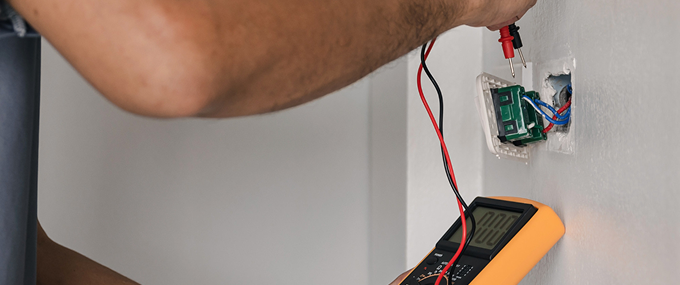
Recurring lighting failures in common areas commonly indicate an underlying issue. Ageing switchboards, deteriorated cabling, moisture ingress, voltage fluctuations, and overloaded circuits can all produce repeated lighting faults without the fittings themselves being the actual problem. Replacing the fitting without investigating the supply side means the underlying issue remains unresolved.
In older apartment buildings, experienced electricians assess whether switchboard upgrades are appropriate when lighting faults occur repeatedly across multiple common areas. The switchboard is commonly where the underlying issue lies, not the fitting at the end of the circuit.
During broader property inspections, contractors also identify additional maintenance requirements that fall outside common property scope. A domestic electrician within the same property portfolio may identify solar repair service requirements or other recommendations worth acting on before they develop into larger issues.
How Can Strata Committees Reduce Long Term Lighting Costs?
The most effective approach is moving from reactive maintenance to planned asset management. Waiting for faults to be reported before acting on them is the approach that produces the most call-outs and the highest total spend.
Practical steps include:
- Recording recurring lighting faults by location to identify patterns rather than treating each one as isolated.
- Replacing ageing fittings before widespread failure forces emergency action.
- Scheduling routine inspections rather than waiting for resident complaints to result in a maintenance request.
- Budgeting for lifecycle replacement so the cost is planned rather than unexpected.
Consistent reporting from an experienced contractor also gives strata committees something they cannot get from reactive maintenance: a picture of the overall condition of the building's electrical system. That information supports better budgeting and removes a significant share of the unexpected maintenance expenses that commonly place additional pressure on maintenance budgets.
Plan Lighting Repairs That Deliver Long Term Value
Conclusion
Choosing the cheapest repair for common property lighting reduces today's invoice. It commonly leads to higher maintenance costs in the months that follow.
Addressing the underlying electrical issue improves safety, reduces the frequency of call-outs, and extends the working life of shared assets across the building.
With over ten years of industry experience, Enelex Electrical Services provides practical advice and dependable solutions as a trusted strata electrician in Melbourne. If your strata property is dealing with recurring lighting faults, our team can identify the cause, recommend the most cost-effective solution, and prepare a maintenance strategy that delivers lasting value rather than a temporary fix.
FAQs
How often should common property lighting be inspected?
It depends on the age, size, and usage patterns of the building. High-traffic apartment complexes benefit from scheduled inspections because catching electrical wear early costs considerably less than responding to unexpected failures. Annual inspections are a reasonable starting point for most buildings.
Should strata replace all lighting fittings at once?
Not always. A staged replacement program is often the better approach. Prioritising high-failure or ageing areas first allows committees to spread the cost while improving reliability where it matters most, rather than committing to a full replacement all at once.
Can LED upgrades reduce ongoing strata maintenance costs?
Yes. Quality LED fittings last longer than older lighting technologies and need replacing less frequently. The grade of product matters as much as the technology. Commercial-grade fittings specified for common property environments outperform consumer-grade alternatives over time.
What information should property managers provide before booking an electrician?
Fault location, how often it has occurred, previous repair history, photos where available, and details of any recent electrical work. That information enables the electrician to diagnose the problem more accurately and arrive with the right equipment.


