


A commercial solar system can lose money without completely stopping. A recurring inverter fault, declining generation or an unresolved electrical issue can quietly reduce the value a business gets from its solar investment.
- Lower generation can increase reliance on grid electricity.
- Partial faults can remain unnoticed for longer than complete failures.
- Delayed diagnosis can make the original cause harder to establish.
- Absence of maintenance can make servicing harder in the future.
Enelex Electrical Services has over 10 years of experience with offering commercial solar repairs in Melbourne. Our team always focuses towards safety, transparent communication, and professional workmanship.
In this guide we discuss where delayed faults can lead to financial losses, the warning signs to look out for and how businesses can take a more organised approach to solar repairs and maintenance.
Focus: A clear understanding too long for commercial solar repairs can cost you more in terms of energy bills, missed generation, equipment downtime and unresolved faults.
Key Consideration: Take into account how much power the solar will produce, how well the inverter works, how to identify and fix problems, testing the electricity, when maintenance needs to be done and when repairs are needed.
Treatment Approach: A commercial solar fault should be diagnosed for its real cause before determining the repair work. Testing may include inverter and wiring, isolators, array performance and related electrical equipment.
Professional Insight: Enelex Electrical Services as an industry expert suggests hiring a resource with straightforward communication, transparent pricing and professional workmanship.
Outcome: Early investigation gives businesses better information on system performance and can reduce the time an unresolved fault impacts on solar generation.
Where Solar Faults Translate Into Financial Loss
The most direct financial effect is reduced solar generation. When a commercial system produces less electricity than expected, the building draws more from the grid to compensate.
The actual cost depends on the system size, extent of the fault, affected equipment and how long the issue goes unresolved.
| Solar problem | What may happen | Potential business impact |
|---|---|---|
| Array output falls | Less electricity is generated. | Lower solar energy savings. |
|
Inverter stops operating |
A section may stop generating. |
Greater grid reliance. |
|
Fault keeps returning |
Production remains inconsistent. |
Ongoing performance loss. |
| Decline goes unnoticed | Reduced output continues. | Longer period of lost generation. |
|
Repair is postponed |
Fault remains unresolved. |
Greater exposure to reduced output. |
A commercial solar system does not have to be completely offline before a fault becomes financially relevant.
Protect Your Commercial Solar Investment
The Hidden Cost of Partial Underperformance
Partial underperformance can be harder to detect than complete failure, and that is precisely what makes it costly.
A failed inverter is obvious. A system producing less than expected may continue appearing operational, particularly when the business does not regularly compare generation against previous periods.
The practical implication is straightforward. A working display does not confirm the whole system is performing to specification.
Performance trends, inverter records and inspection findings provide a more reliable picture of actual output than a single daily production figure.
Warning Signs That Warrant Closer Attention
Businesses should investigate persistent or unexplained changes in solar generation, particularly when site operations have remained broadly consistent.
Look for:
- Generation changes: Output is lower than comparable previous periods.
- Repeated inverter warnings: The same error appears multiple times.
- Unexpected shutdowns: Equipment goes offline and later returns without explanation.
- Reduced energy savings: Electricity costs shift without an obvious operational reason.
- Monitoring irregularities: Production data shows an unusual pattern.
- Missing inspections: The system has not received a formal assessment for an extended period.
A single poor production day does not automatically indicate equipment failure. Weather and operating conditions affect generation.
The stronger signal is a persistent, unexplained change that holds across multiple days or billing periods.
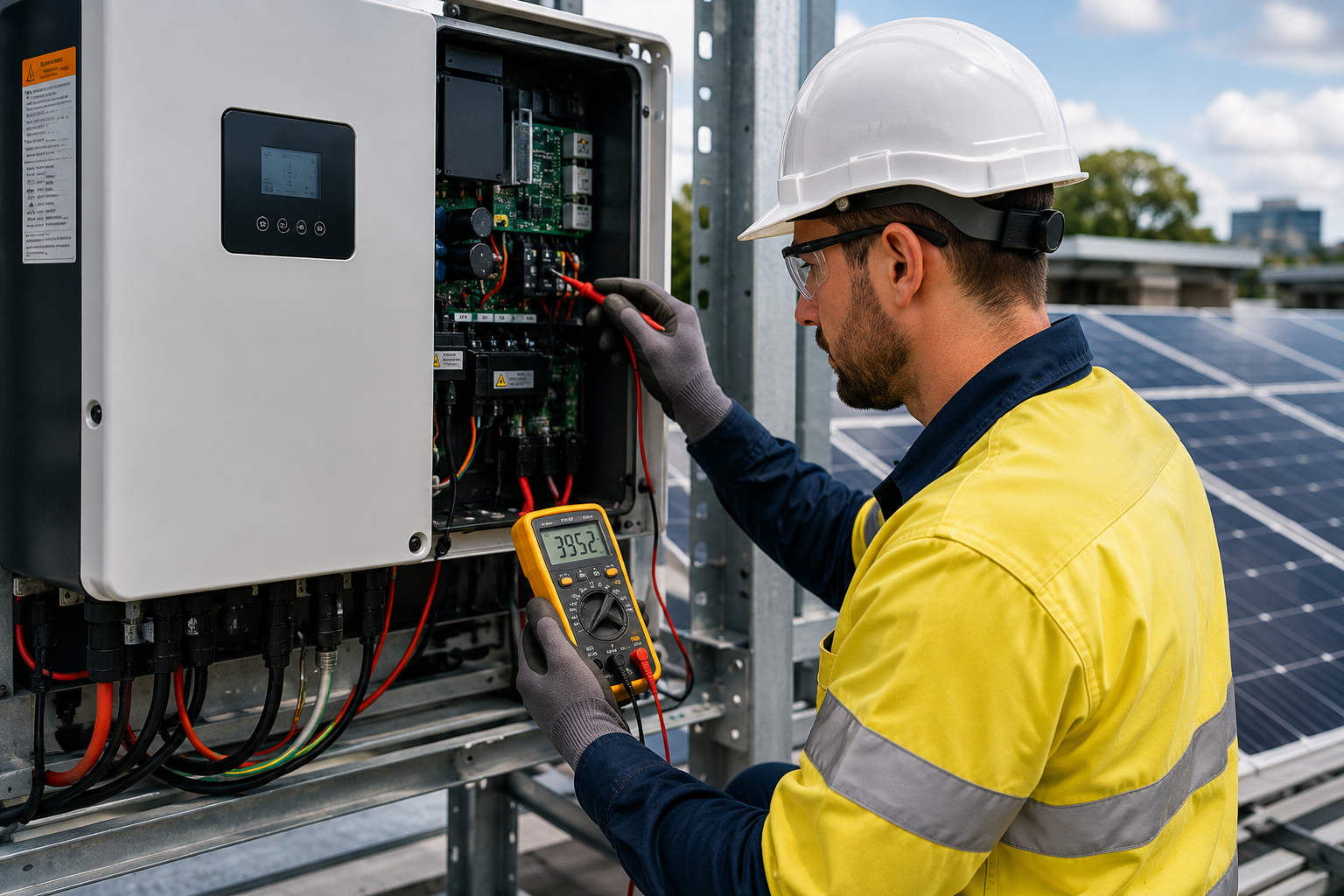
This is where solar fault finding becomes valuable. Rather than assuming the panels are responsible, a professional assessment considers the array, inverter, wiring, isolators and other relevant electrical components together.
Ask One Simple Question First
Has the solar system changed, or has the business changed?
A shift in operating hours, energy consumption or site conditions can affect production and electricity costs independently of the solar equipment.
If business operations have remained relatively consistent while solar performance has declined, the system warrants closer attention.
Inverter Faults and Why They Require Proper Diagnosis
An inverter fault can reduce or stop generation from the section of the system connected to it. The effect depends on the commercial solar design, inverter configuration and extent of the fault. A recurring error needs diagnosis and not repeated resets.
What May Need To Be Checked
Depending on the fault, an assessment may consider:
- Isolator condition.
- Overall system performance.
- Associated electrical equipment.
- Cooling and ventilation conditions.
- Relevant DC and AC connections.
- Inverter operating status and fault history.
Solar inverter repairs therefore go beyond reading an error message and replacing a component on assumption. The technician needs to establish whether the inverter itself has failed or whether another part of the installation is contributing to the problem.
Why Repair Timing Has a Direct Cost
Businesses sometimes delay repairs because the system continues generating some electricity. That position can appear reasonable when there is no complete shutdown. Partial production, however, does not confirm normal system performance.
Recording when output changed, when an alarm first appeared and what the system was doing at the time creates useful context for diagnosis. It also gives the business better information for deciding whether the situation calls for repair, replacement, monitoring or further testing.
What a Commercial Solar Repair Assessment Should Cover
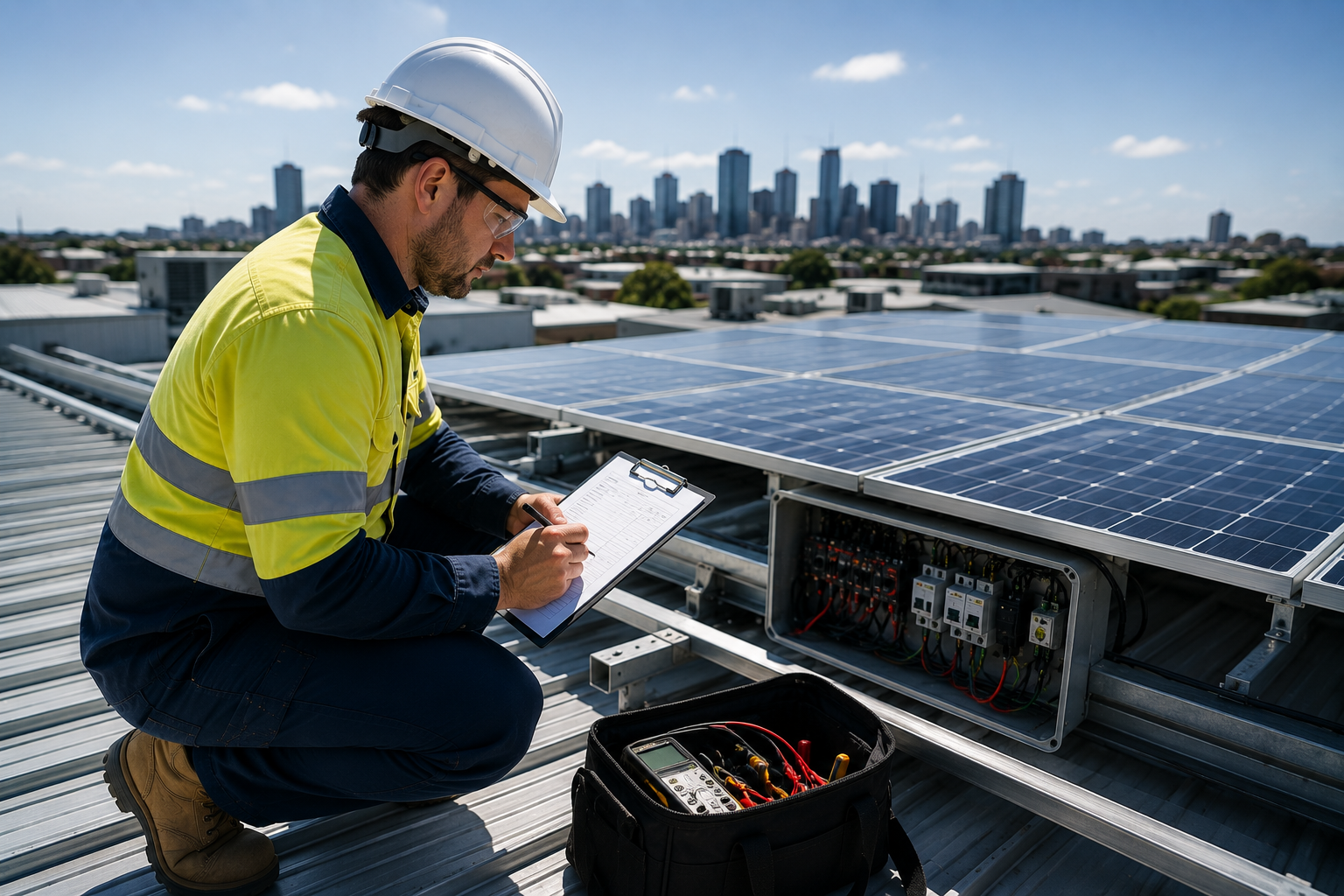
A useful assessment looks beyond the first component that appears faulty. Solar installations contain connected electrical and generation equipment, so the visible symptom may not identify the actual cause.
Start With The System
A repair assessment may consider several areas.
|
Area |
What the assessment may consider |
|---|---|
|
Solar array |
Panel condition, visible damage and generation performance. |
|
DC equipment |
Wiring, connections and isolators. |
|
AC equipment |
Connections and associated electrical components. |
|
Inverter |
Operating condition and fault history. |
|
Switchboard |
Relevant electrical equipment and connections. |
|
Performance data |
Changes in generation and operating patterns. |
For larger solar panels for commercial buildings, the scale of the installation makes a structured assessment particularly important. A problem affecting one section of an array requires a different response from an issue affecting the complete system.
What A Good Repair Process Should Achieve
The objective is to work from evidence rather than assumption:
- Identify the likely cause.
- Carry out appropriate testing.
- Explain the findings clearly.
- Recommend the required work.
- Obtain approval before additional repair work proceeds.
This approach reduces the risk of replacing equipment simply because it appears associated with the fault rather than because testing has confirmed it.
Planned Maintenance Reduces the Cost of Solar Faults
Scheduled inspections and performance monitoring give businesses a better opportunity to identify changes before they develop into prolonged production problems.
A practical electrical maintenance programme can combine several activities.
|
Maintenance activity |
Practical purpose |
|---|---|
|
Performance monitoring |
Identifies unusual production changes. |
|
Scheduled inspections |
Provides regular system checks. |
|
Inverter reviews |
Identifies recurring operating problems. |
|
Electrical testing |
Assesses relevant electrical components. |
|
Service documentation |
Builds a useful system history. |
|
Fault response |
Creates a clear process when problems arise. |
The right inspection frequency depends on the system, site conditions, size and operational requirements. A larger or more complex installation typically warrants closer attention than a smaller system.
Why Documentation Has Practical Value
Service records are sometimes treated as administrative paperwork. For a commercial property, they carry operational value that compounds over time.
A well-maintained record shows:
- What was inspected.
- What faults were identified.
- What testing was completed.
- What repairs were carried out.
- Whether additional work was recommended.
Enelex provides multi-unit electrical maintenance for clients managing multiple properties, supporting broader commercial electrical requirements across sites. This wider context matters because electrical maintenance and solar servicing can overlap where a fault involves the building's electrical infrastructure rather than the solar equipment alone.
When to Arrange a Commercial Solar Repair Assessment
A business should arrange professional assessment when solar output changes unexpectedly, inverter faults recur, part of the system appears offline or the installation has not received a formal inspection within a reasonable period.
Waiting for complete failure means accepting an undefined period of reduced generation that cannot be recovered.
A Practical Response
- Review recent production: Look for a persistent change rather than one unusual day.
- Record inverter warnings: Keep error messages and shutdown information as they occur.
- Check site operations: Consider whether business activity or consumption patterns have changed.
- Arrange assessment: Investigate any unexplained performance change promptly.
- Keep the report: Store service findings with the system records for future reference.
This gives the business a clearer basis for deciding whether the situation requires monitoring, repair, replacement or further investigation.
Why Electrical Experience Matters in Solar Fault Diagnosis
Commercial solar equipment operates as part of a wider electrical installation. The quality of the assessment matters when a business is dealing with recurring faults, unusual performance or related electrical issues that extend beyond the panels themselves.
Enelex Electrical Services works with businesses, private clients and property managers across commercial electrical and solar servicing.
The priority for any assessment is the same: identify the problem accurately, explain the findings and available options clearly, and carry out the appropriate work with pricing confirmed before proceeding.
Keep Your Solar System Performing Properly
Conclusion
Delayed solar faults reduce generation, increase grid electricity use and leave a business carrying an avoidable operating cost. The harder problems to catch are the ones that continue quietly while the system still appears to be running.
Early assessment, consistent performance monitoring and complete service records give businesses the information they need to manage commercial solar repair without waiting for a complete failure to make the problem visible.
If your commercial solar output has changed or your inverter continues to report faults, contact us to discuss the appropriate next step.
FAQs
Can a commercial solar system still generate power if part of it has failed?
Yes. A fault may affect one section of the system, while other equipment continues to operate, depending on the configuration of the system. The system can thus seem to be working while generating less electricity than expected. Instead of watching if the inverter is running, look for persistent changes in generation.
Is a lower electricity bill the only way to identify a solar performance problem?
No. Production monitoring, inverter records and historical generation data may provide useful signals before the effect becomes obvious in an electricity bill. Looking at your results over time can help you identify changes that may need to be checked by an electrician.
What happens if an inverter fault disappears after a reset?
A temporary return to normal operation does not mean the underlying issue has been solved. Record the fault information and arrange appropriate assessment if the problem reoccurs. Recurring faults could be due to the inverter or another connected part of the system.
Do businesses need to keep commercial solar service reports?
Yes. Service reports show the condition of the system, any faults identified, testing and work done. Consistent records can make future maintenance decisions easier, and give technicians useful background information for commercial properties and managed sites.


